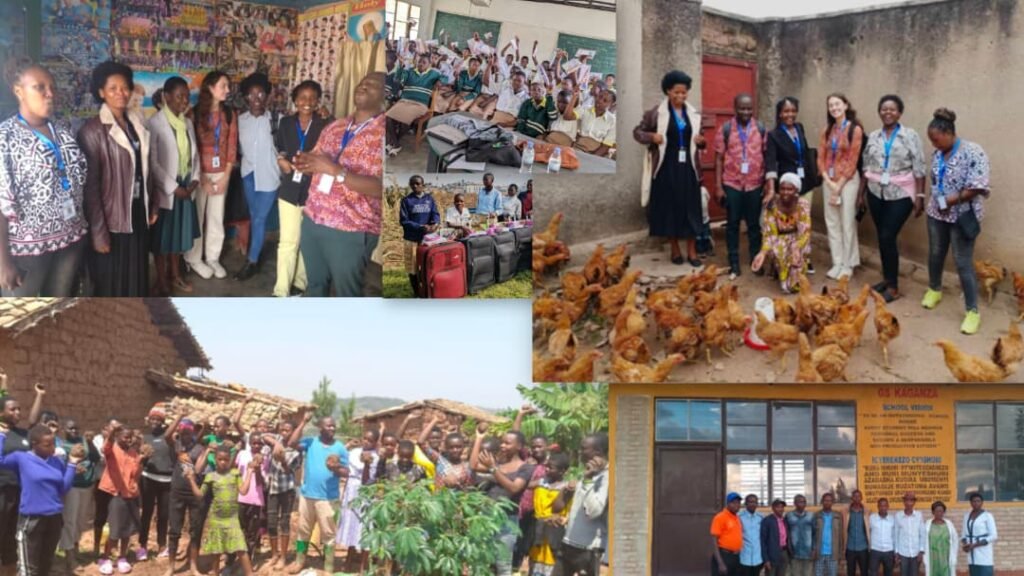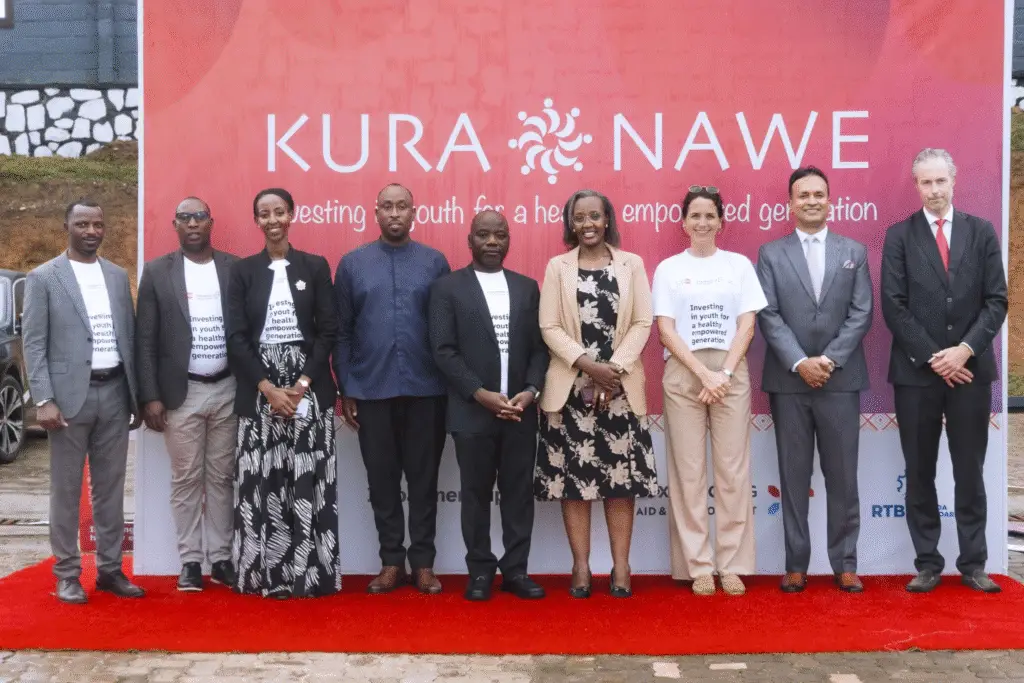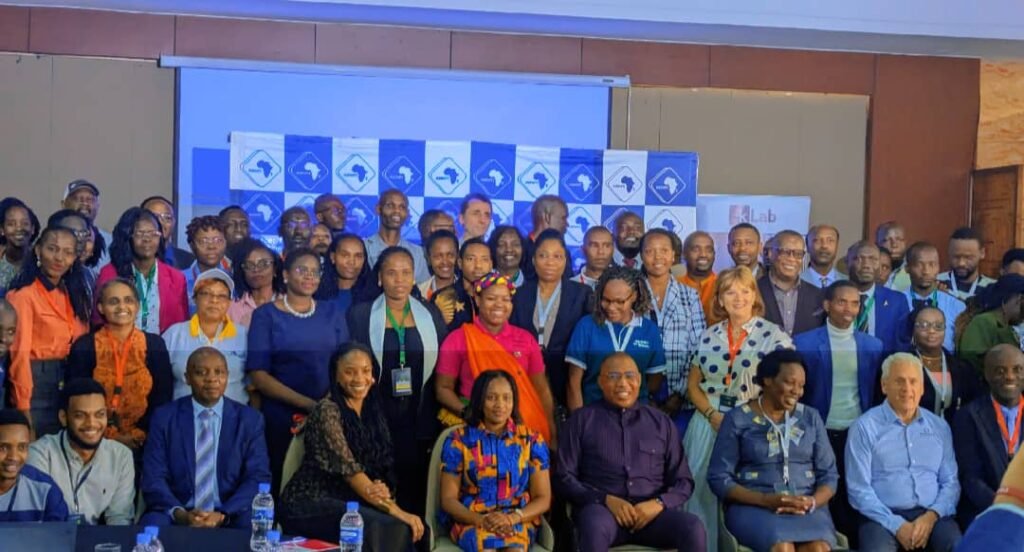
As students prepare to return to school, Women Plan Rwanda is sending some of them back with more than books, uniforms and other school materials.
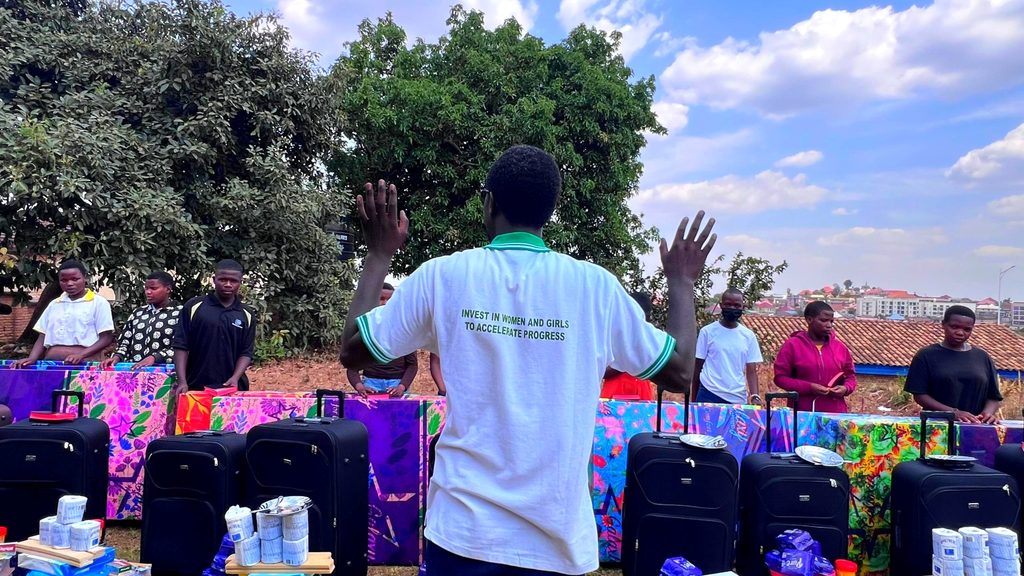
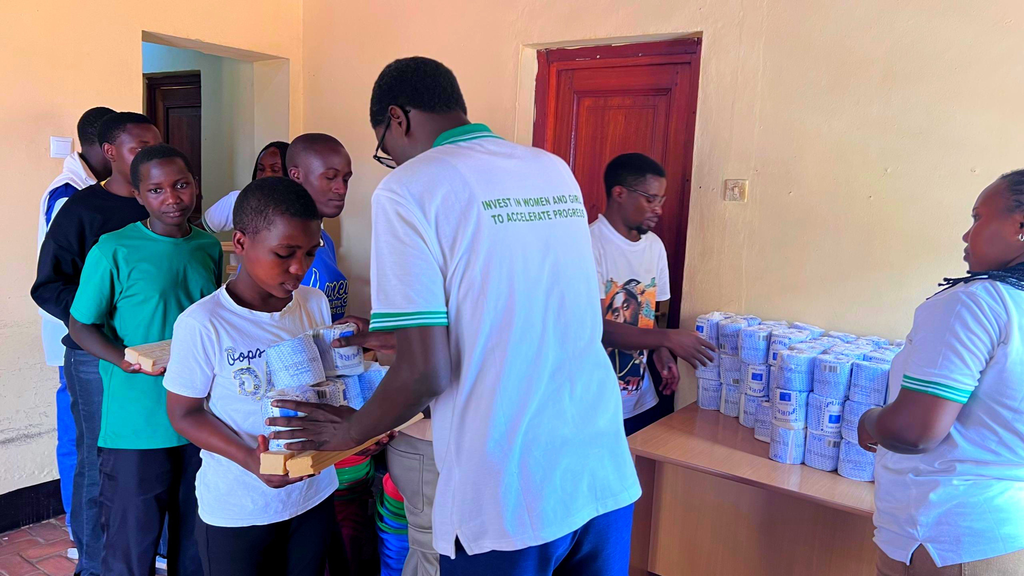
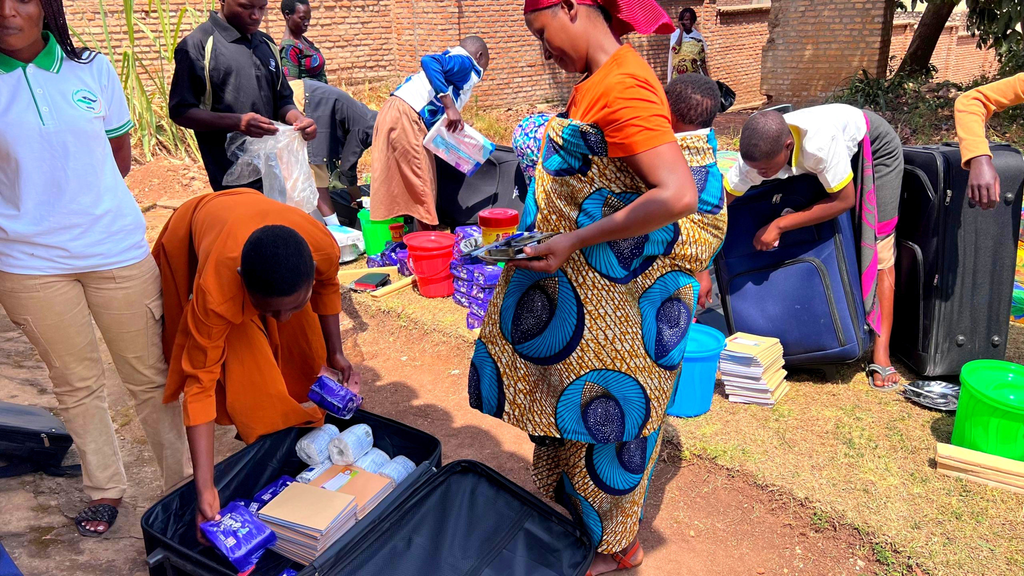
On September 6, 2026, the organisation provided school materials to students preparing to continue their education, particularly those going to boarding schools.
But alongside the materials came another message one that the students say they will carry with them to school: learn to say a big “No” to pressure, relationships and choices that could put their education at risk.
The students were given lessons on reproductive health, relationships, early pregnancy and sexually transmitted infections. They were also encouraged to understand their rights, protect themselves and remain focused on their studies.
For Women Plan Rwanda, says A student needs materials to learn, but also needs knowledge and confidence to remain in school.
A New School Term with Less Fear
For families in rural communities, preparing a child for a new school term can be difficult.
The cost of school materials and other basic needs can put pressure on families, and some students have had to attend school without everything they need. In some cases, students say they missed lessons or were sent home because they did not have the required materials.
Niyikiza Francine, a student at Saint Joseph who is moving to Level Four, said she knows the difference that support can make.
“Before, when I went to school, there were materials that I did not have. Sometimes I would go to school without what I needed. But now, because of the project, I do not have that problem. I can reach school on time and I have the materials I need. I can study without worrying about something that I do not have,” she said.
Francine said the lack of materials had also affected her performance in class.
“Before the project came, my marks were low because sometimes I could not study properly. Now I can study well and take my exams without worrying about being sent away because I do not have the materials. My marks have improved and I have reached 75 percent and above,” she said.
For her, the support means starting the new school term with fewer worries and more confidence.
From 65 Percent to 82 Percent
Umutoni Yvette, a Level Four Tourism student at College Baptiste Saint Silvestre de Kinigi, also remembers the difficulties she faced before receiving support.
She said her family did not always have enough money to buy everything she needed for school.
“Before, it was very difficult. At home, my family did not have enough money to get the materials we needed. Sometimes you could go to school without the things required, and you could even be sent away,” Yvette said.
“But now we receive the materials on time. We go to school with everything we need, we study with other students and we are happy because we can also get better marks.”
Yvette said her marks have improved from about 65 percent to between 82 and 83 percent.
“Before, I was getting about 65 because sometimes I went to school and sometimes I did not. Now the materials are available. I go to school on time, study with others and do my assignments. Everything is becoming easier. Now I get around 82 or 83,” she said.
The improvement has given her a bigger goal as she continues her studies.
Boarding School Becomes Possible
For Irasubiza Fiette, who completed Senior Three at Groupe Scolaire Kaganza and is preparing to study at Nyanza Technical Secondary School, the support has helped make boarding school possible.
She said her family had limited resources and she was not sure she would be able to meet all the requirements.
“Because of the limited resources at home, I did not think I could go to boarding school. But because of the support we received, I now have the materials I need,” Fiette said.
“I am very happy because I believe this will help me study well and achieve my goals.”
For students like Fiette, going to boarding school also means spending more time away from home and facing new situations without their parents nearby.
That is where the second part of Women Plan Rwanda’s message comes in.
The Big “No”
Women Plan Rwanda says giving students school materials is not enough.
The organisation is also preparing students for some of the social pressures they may face when they return to school.
Students were encouraged to learn about reproductive health, understand the changes happening in their bodies and know how to protect themselves from unintended pregnancy and sexually transmitted infections.
They were also told to be careful about relationships that could distract them from their education.
Yvette said the advice is particularly important because students may meet people at school who try to start relationships with them.
“When you arrive at school, you can meet people who tell you that they love you. Some may try to take you into other behaviours. But you have to remember that you came to school to study,” she said.
“You have a goal and you want to work hard and pass your exams. When someone comes and asks you to start a relationship, you remember the advice you received and continue with your studies.”
For her, saying no is part of protecting her education.
“If someone comes and tells you that they want you to be their partner, you remember that you were told not to go to school for relationships. You went there to study. So you refuse and continue with your plan to study and get good marks,” she said.
“No Means No”
Umurungi Jessica said the reproductive-health lessons helped her understand information she had heard before but had not taken seriously enough.
“I had heard some of these things before, but I did not give them enough importance. Now I understand them better. I learned about how the body changes, how to protect yourself and that you can say no,” she said.
“Now I understand these things well enough that I can also explain them to other people.”
For Brandine, who is moving to Senior Four, said
“The advice about reproductive health is important because when you go to boarding school, you can meet different challenges. The advice will help us protect ourselves,” she said.
“I understood clearly that no means no.”
Brandine is also setting herself a new academic target.
“If I was getting 80 before, I want to reach 90,” she said.
Why Women Plan Rwanda Is Combining the Two
Muvunyi Gustave, director of Women Plan Rwanda, said the organisation supports women and girls, particularly girls living in rural communities.
He said the current project supports about 222 children, with the latest distribution beginning with 39 students going to boarding schools.
“Today we came together to provide school materials to students who are going to school. The project has around 222 children, but we started with those going to boarding schools. We started with 39 students and gave them materials that will help them study well, get good marks and reach their long-term goals,” Gustave said.
The organisation’s concern goes beyond whether students have books and other school supplies.
Gustave said unintended pregnancy is one of the challenges that can interrupt a girl’s education.
“Unplanned pregnancy is one of the things that worries us because it can make girls leave school while they are still young. That is why we give them information about reproductive health,” he said.
“We remind them that they need to protect themselves and make good decisions so that nothing stops their education.”
He said the students are also encouraged to reject people who may try to mislead or take advantage of them.
“We remind them that they should protect themselves and avoid things that can become a barrier to finishing their education. We tell them that they should be able to say no to sugar daddies and other people who may try to mislead them,” Gustave said.
Parents Feel the Difference
The support has also been welcomed by parents, who say school expenses can be difficult to manage.
Nyandwi Fidèle said providing for his child’s school needs had previously been a challenge.
“There were things that were difficult for me to provide for my child. Food and school needs were a big challenge. But because of the support from the project and its partners, things have become easier. My child can study, has the materials and can continue with school,” he said.
Another parent, Mukazayire Paulin, said her daughter’s education has also improved since receiving support.
“We are very happy because before joining this project, we did not have the materials. The child could go to school without what she needed, and sometimes she would lose study time,” she said.
“Since we started working with the project, her studies have improved. She even came first in class, something that had not happened before.”
Parents also said the reproductive-health discussions are useful because some subjects can be difficult to discuss at home.
One parent explained that adults do not always feel comfortable talking to their children about reproductive health. The lessons therefore give parents another opportunity to continue those conversations with their children.
A Bigger Goal: Keeping Girls in School
Rutayisire Marcel, a Women Plan Rwanda Field Officer, said the organisation’s work in rural communities is focused on removing barriers that can push children out of school.
“The reason Women Plan Rwanda goes into rural communities to support girls is to fight anything that can make a girl leave school. Poverty, unplanned pregnancy and other challenges can push children out of school,” Marcel said.
“When we give them the school materials they need, they can study better and remain in school as they work toward a better future.”
But Marcel said a girl who has already left school should not believe that her future has ended.
“A girl who has left school should not think that her life is over. She is still capable. She can return to school or join vocational training and develop skills that can help her improve her life,” she said.
she also encouraged young people to seek reproductive-health information and learn how to protect themselves from unintended pregnancy and sexually transmitted infections.
For Women Plan Rwanda, the work is about removing barriers while giving students the confidence to face the challenges that may come their way.