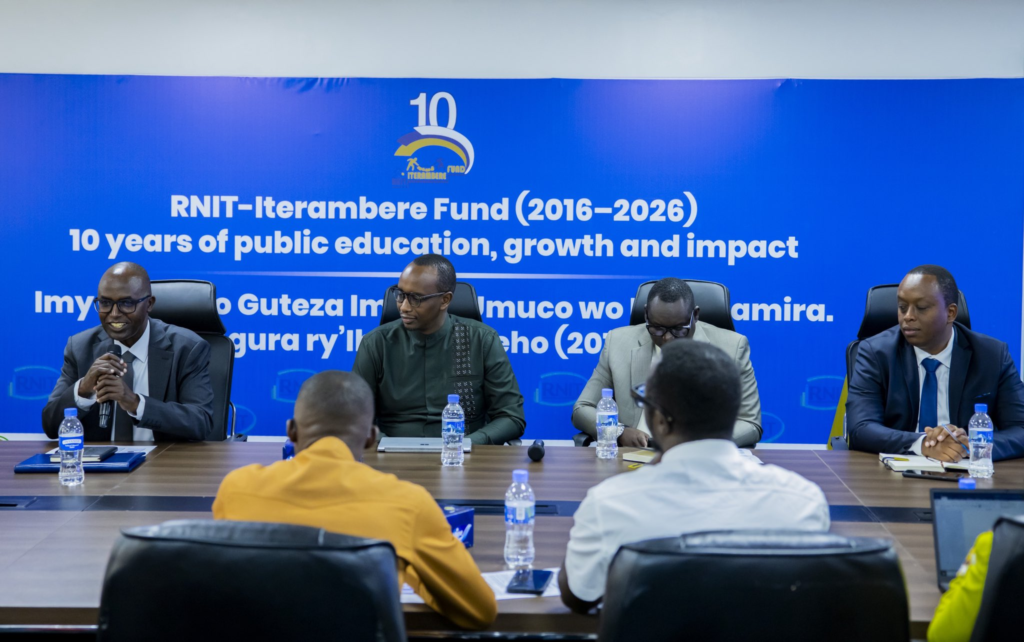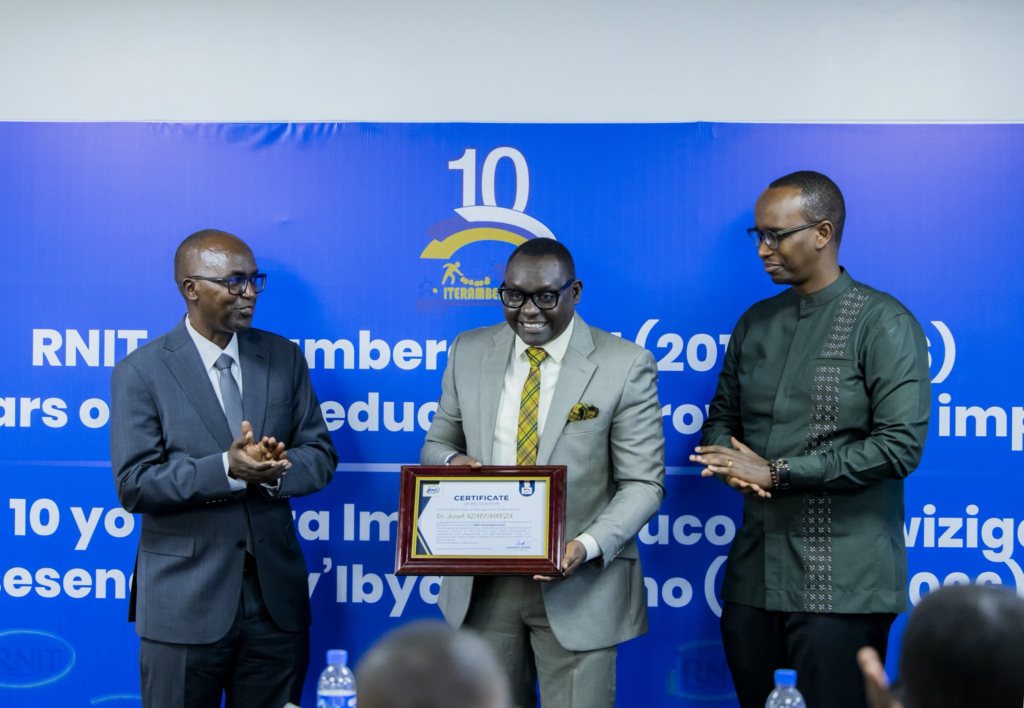
Rwanda’s the Rwanda National Investment Trust Iterambere Fund (RNIT) has grown its assets to more than Rwf86 billion and attracted over 350,000-unit holders in its first 10 years of operation, officials have said.
The fund, Rwanda’s first Collective Investment Scheme, was established in 2016 to help Rwandans save, invest and build wealth through professionally managed investments.
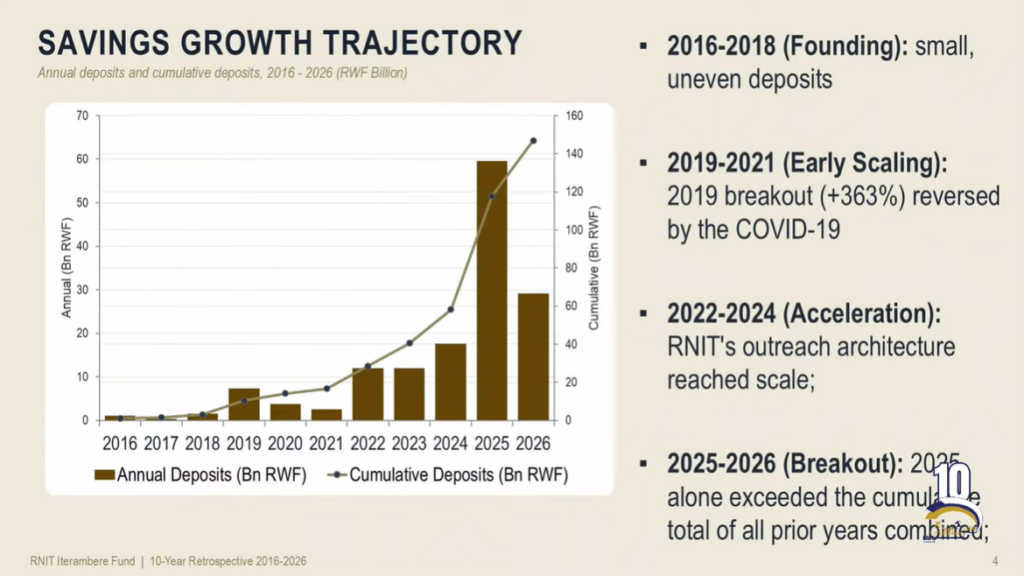
Figures released as the fund marked its 10th anniversary on 12 July 2026 show that it has collected more than Rwf145 billion since its launch, including money currently invested and funds that investors have withdrawn over the years.
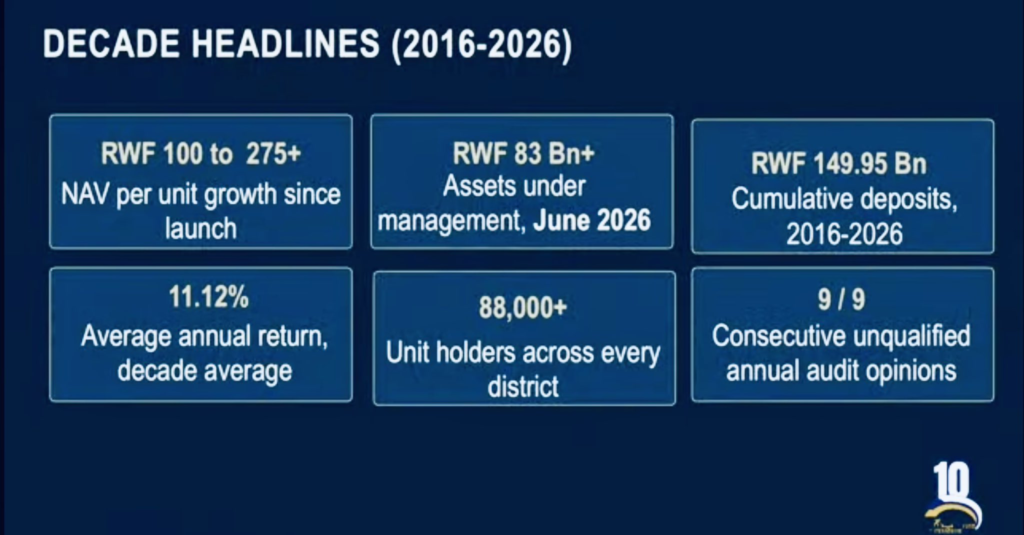
The fund now has more than 90,000 registered accounts representing over 350,000-unit holders, including individuals, savings groups, students, young people, salaried workers, cooperatives, small and medium-sized businesses, families and institutions.
RNIT said the fund recorded strong growth in 2025 alone, when more than 40,000 new accounts were opened and Rwf59 billion was collected.
The value of assets under management has grown from less than Rwf1 billion in the fund’s first year to more than Rwf86 billion today.
The fund has also generated an average annual return of more than 11 per cent over the past decade.
The value of one unit has increased from Rwf100 when the fund started in 2016 to Rwf274 in 2026.
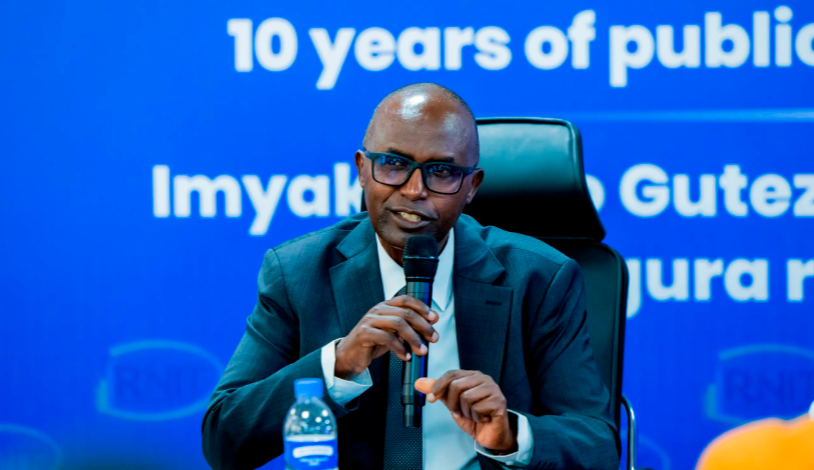
Jonathan Gatera, the Chief Executive Officer of Rwanda National Investment Trust Ltd (RNIT Ltd), said the growth of the fund shows the impact that regular saving and professional investment management can have on people’s lives and the country’s economy.
“The success of RNIT Iterambere Fund belongs to every investor who chose to save for their goals and a better future,” Gatera said.
“Over the past 10 years, through this fund, we have shown that regular saving, professional investment management and good governance can change people’s lives and contribute to Rwanda’s economic development. In the next 10 years, our goal is to continue expanding financial services, savings and investment opportunities to everyone, use technology to improve service delivery and make it easier for every Rwandan to access investment opportunities.”
Fund Targets More Rwandans
Despite the progress, RNIT officials said the number of Rwandans saving and investing remains low compared to the country’s population.
Gatera said Rwanda’s national savings remain below 15 per cent of Gross Domestic Product (GDP), while the country needs to increase the rate to more than 30 per cent to achieve its long-term development goals.
Women and young people are among the groups the fund wants to attract.
Officials said women account for about 37 per cent of investors in the fund. Young people below the age of 30 also account for about 37 per cent.
RNIT said it plans to increase financial education campaigns in schools, workplaces, cooperatives, savings groups, religious organisations and communities across the country.
The organisation is also planning to work with education authorities to promote saving and investment among teachers and students.
Technology Behind Recent Growth
RNIT officials said increased use of technology has played an important role in the fund’s recent growth.
The fund is now working to connect its services with banks, mobile money operators and other payment systems to make it easier and cheaper for people to save.
Gatera said discussions are ongoing with payment service providers to find a system that will allow people to save through their mobile phones at a lower cost.
However, direct withdrawals through mobile money are not yet available.
Officials said the decision is partly linked to security concerns and the rules currently governing the fund.
RNIT officials said investors currently request withdrawals on Thursday and receive their money on Tuesday.
According to the officials, this system also encourages people to think carefully before withdrawing money meant for long-term goals.
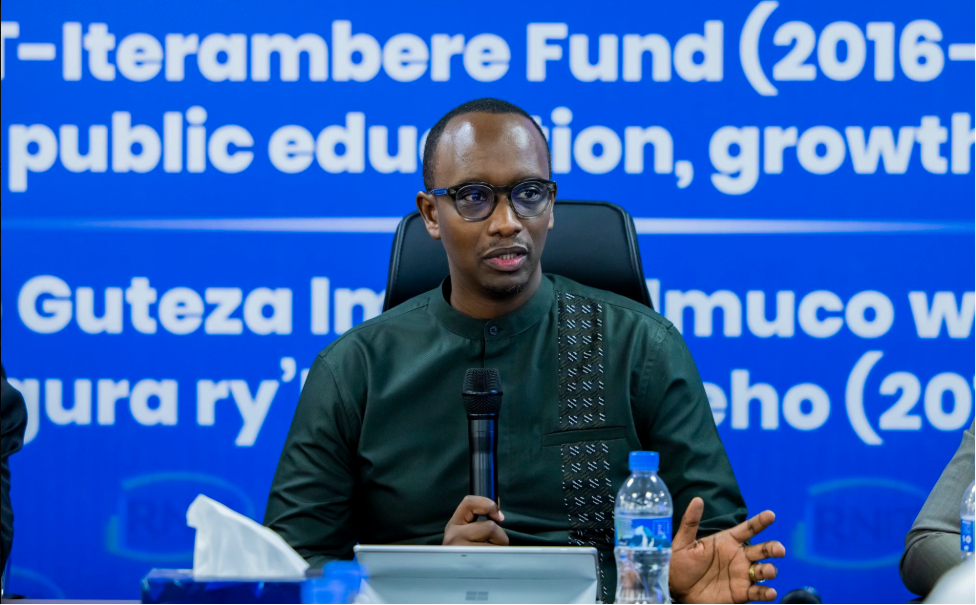
Romeo Ngarambe, the Chief Executive Officer of Rwanda’s Capital Market Authority (CMA), said collective investment schemes have made it possible for ordinary Rwandans to enter the capital market.
He said investing should not be seen as an opportunity reserved for wealthy people.
“Today, a trader, a teacher, a government or private sector employee, a cooperative member, a young person and other Rwandans can start investing according to their financial ability,” Ngarambe said.
“The important thing is not the amount of money a person starts with. What matters is to start, build a culture of saving and plan for the future.”
Ngarambe said collective investment schemes bring together small amounts of money from many people, creating larger pools of capital that can be professionally invested.
He added that the Capital Market Authority will continue protecting investors and ensuring that companies operating in the capital market follow the law.
“Our goal remains to strengthen the rights and security of investors so that people’s confidence in saving is never affected,” Ngarambe said.
“We will continue to promote transparency and professionalism in the capital market, encourage innovation in investment products that meet the needs of different groups of people and increase financial and investment education, especially among people with low and middle incomes.”
How Investors’ Money Is Protected
Responding to concerns about the security of people’s savings, RNIT officials said the fund operates under the supervision of different institutions.
The Capital Market Authority regulates the fund, while the National Bank of Rwanda oversees fund management operations and serves as the custodian of investors’ money.
Officials said RNIT does not keep investors’ money in its offices.
The money is held by the custodian and invested in different financial products, including government bonds, Treasury bills, bank deposits and other investments allowed under capital market regulations.
Gatera said most of the money is invested in fixed-income assets, helping protect investors from major changes in financial markets.
RNIT also said it is financially independent and has not received government funding for its daily operations since 2014.
According to Gatera, the institution now generates enough income to pay its employees and finance its activities and future development plans.
RNIT Eyes Next Phase of Growth
As it enters its second decade, RNIT plans to increase the use of technology, expand financial education and reach more people in rural areas.
The institution also wants to increase financial inclusion among women, young people and persons with disabilities.
RNIT is considering listing Iterambere Fund on the Rwanda Stock Exchange to increase its visibility and allow more investors, including Rwandans living abroad, to follow its performance.
RNIT officials said their focus over the next 10 years will be to encourage more Rwandans to develop a regular saving culture and use their savings to build personal wealth while contributing to the country’s economic development.