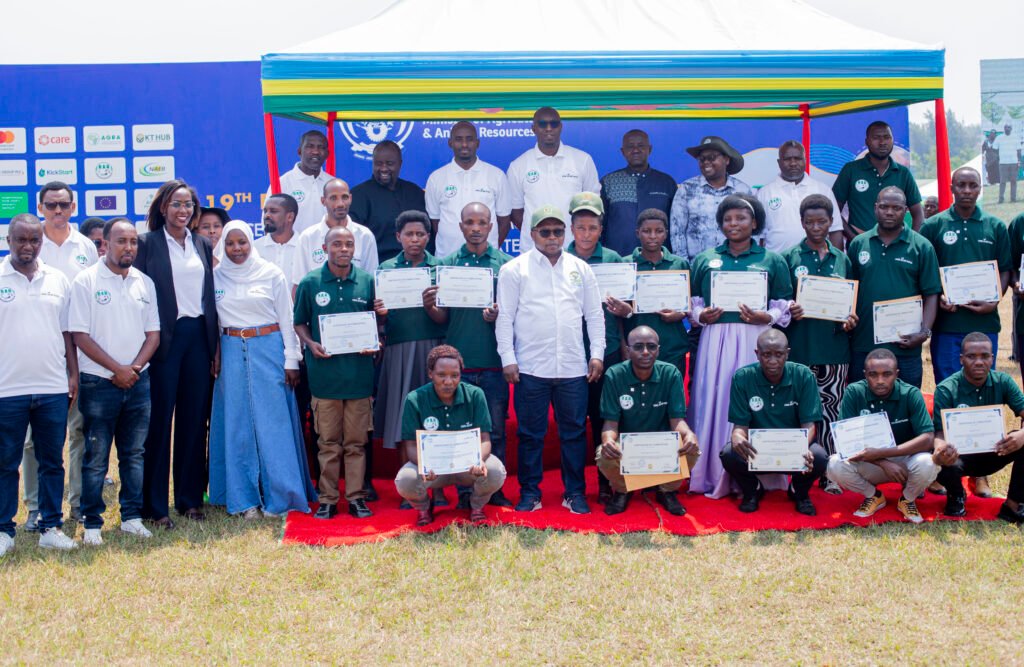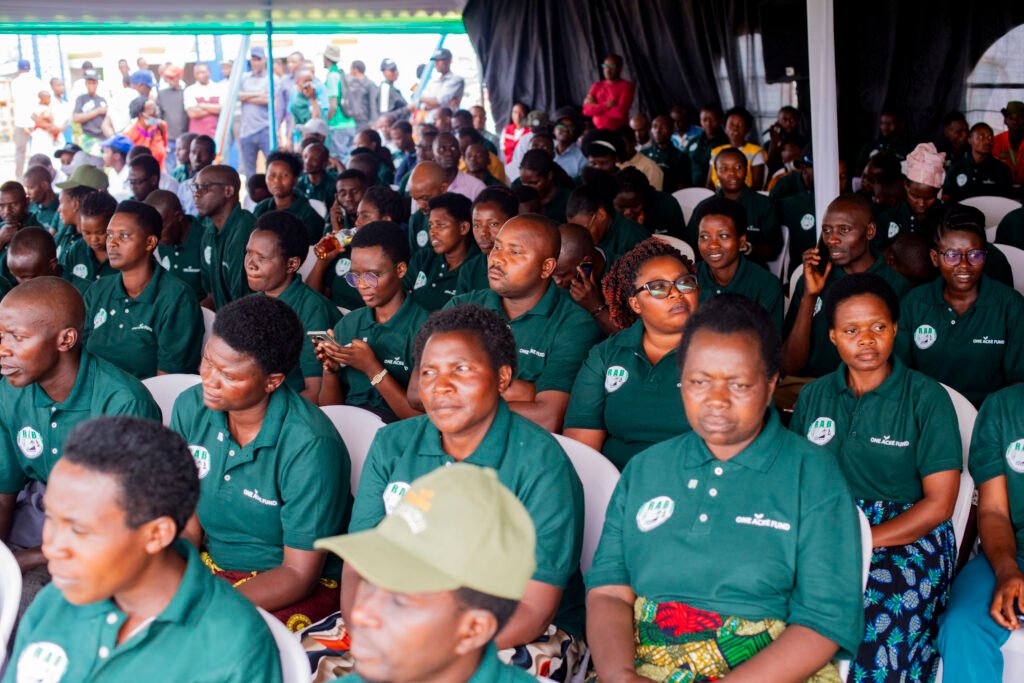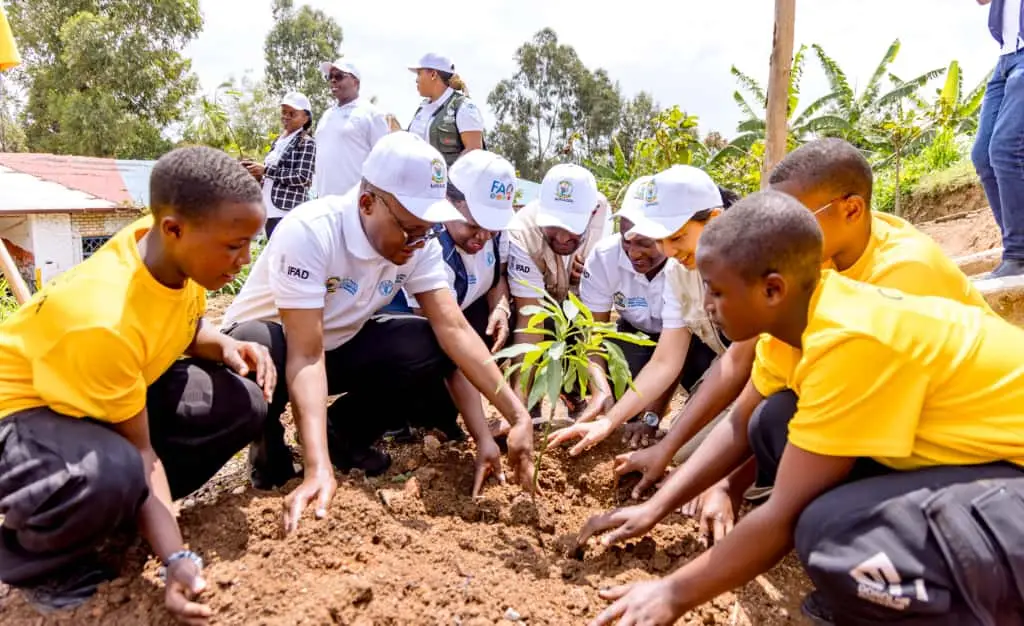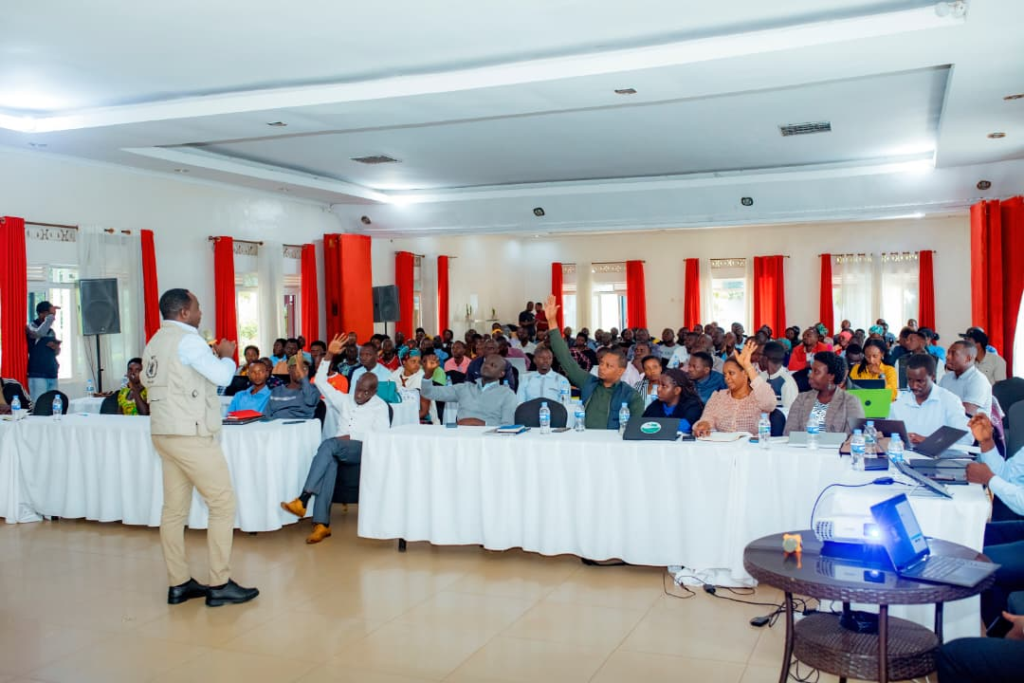
311 newly certified extension agents say they are ready to help farmers increase production, adopt climate-smart agriculture and improve food security across Rwanda
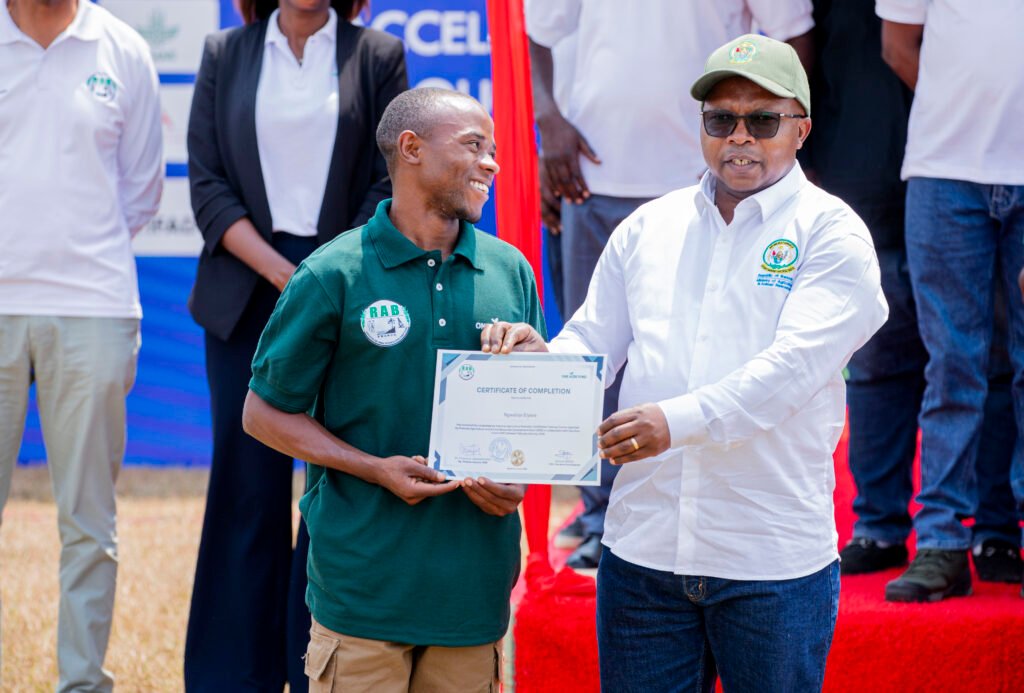
More than 300 agricultural extension agents trained by One Acre Fund Rwanda have committed to help farmers adopt modern farming practices after completing a national training programme aimed at increasing agricultural production and improving food security.
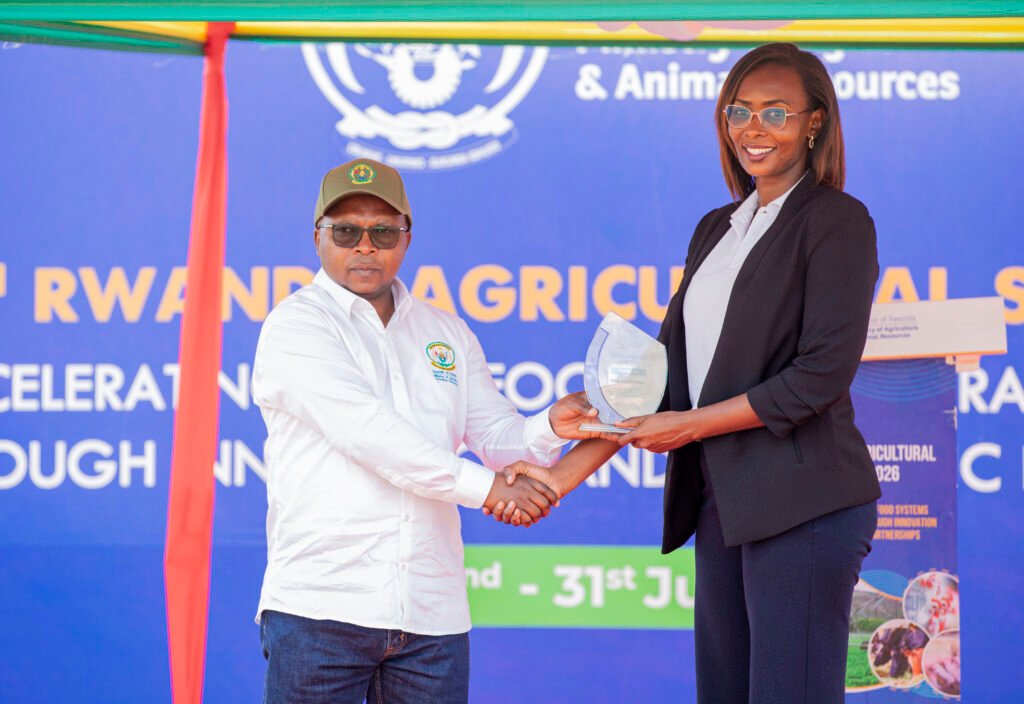
The 311 extension agents received nationally recognized certificates during the closing ceremony of the 19th International Agriculture and Animal Resources Exhibition (Agri Show 2026) held in Kigali.
The training was organized by the Ministry of Agriculture and Animal Resources (MINAGRI) through the Rwanda Agriculture and Animal Resources Development Board (RAB) in partnership with One Acre Fund Rwanda.

The newly certified extension agents completed months of practical training at Food Basket Sites (FOBASI), where they learned climate-smart agriculture, soil conservation, crop management, integrated pest management, post-harvest handling and modern farming techniques. Their role will be to transfer this knowledge to farmers and support them in adopting practices that increase productivity while protecting natural resources.
Taking modern agriculture to farmers
For Mukeshimana Drocella, an extension agent from Kivuye Sector in Burera District, the training has prepared her to become a trusted advisor to farmers at a time when agriculture is increasingly affected by climate change.
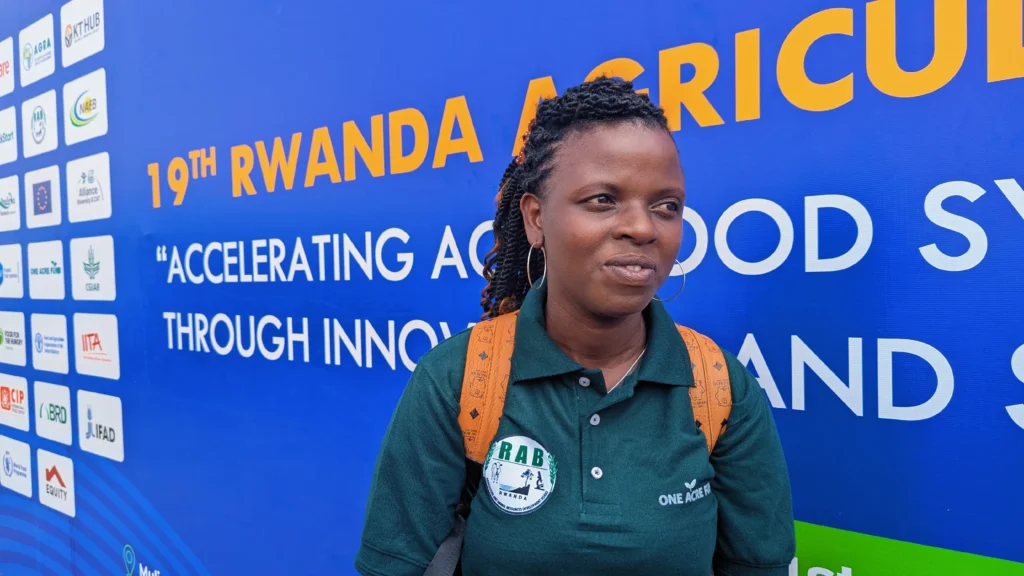
She said the knowledge gained during the program will help farmers move beyond subsistence farming and embrace professional agriculture that produces more food and generates income.
“We learned many subjects, but the most important was how to work directly with farmers in their fields. We are going to help them practice professional farming so they can produce high-quality crops in larger quantities. Our goal is to help farmers produce enough food for their families while also having surplus to sell in the market.” She said
Drocella said one of the biggest challenges facing farmers today is unpredictable weather.
“Climate change has become one of the biggest problems in agriculture. Sometimes rainfall is too heavy and sometimes it does not come at all. During the training we learned conservation agriculture, which focuses on protecting the soil. We teach farmers to leave crop residues on the field after harvesting and reduce unnecessary soil disturbance. These practices prevent soil erosion and help the soil store moisture even during dry periods.” She said
She explained that demonstration farms established during the training have already shown encouraging results.
“We introduced these methods to farmers and many of them adopted them. On one demonstration plot, bean production increased from about 10 to 15 kilograms per area to between 28 and 40 kilograms. Although the rainy season ended earlier than expected, the crops continued to grow because the soil had retained enough moisture. That proved to farmers that these practices really work.”
Improving harvests through better farming practices
Another graduate, Dushimiyimana Eric, believes the training will help extension agents solve many of the problems farmers have struggled with for years.
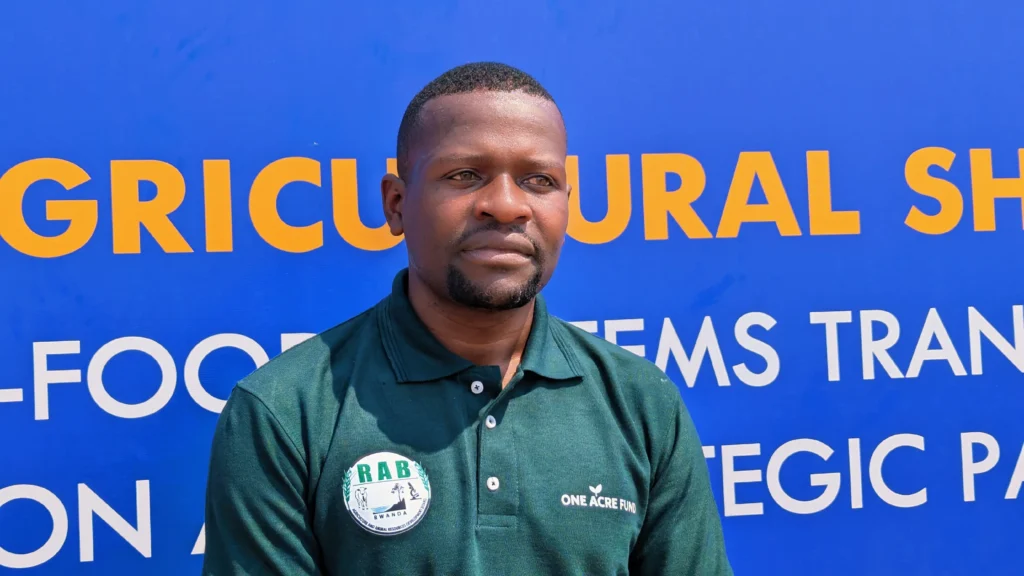
He said their responsibility now is to work closely with farming communities and ensure modern agricultural knowledge reaches every farmer.
“Our contribution is to improve agriculture where farming has not been done professionally. Since the training started, we have already seen positive changes, but now it is time to put everything into practice. We will continue working closely with farmers, teaching them and helping them improve their production.” He said
Eric said protecting farmland from erosion will remain one of the priorities.
“Many farmers used to leave their fields bare after harvesting, which exposed the soil to erosion. We will encourage them to leave crop residues on their land because they protect the soil, improve soil fertility and conserve moisture.”
He pointed to potato production as one example of the impact already being seen.
“Some farmers harvested only five to ten tonnes of potatoes per hectare. Those who adopted the improved farming practices are now producing between 20 and 25 tonnes per hectare. That shows the knowledge we received can make a real difference.”
He added that extension services offered by the trained agents will remain free of charge, allowing more farmers to benefit from professional agricultural advice.
One Acre Fund highlights growing impact
Speaking during the graduation ceremony, Sonia KANAMUGIRE MUHIKAZE , Director of Government Partnerships at One Acre Fund Rwanda, said the certification marks another important milestone in strengthening Rwanda’s agricultural extension system.
She noted that the partnership between One Acre Fund, RAB and the Government of Rwanda has already reached millions of farmers across the country.
“Today is not only a celebration of the graduation of another group of extension agents. It is also a celebration of a strong partnership that has helped build a professional agricultural extension system in Rwanda. Through this collaboration, more than two million farmers have received agricultural knowledge and practical support.”
Muhikaze said the organization has significantly expanded extension services over the past decade.
“Since 2015, agricultural extension services have expanded by more than 400 percent. This system has helped connect national agricultural policies with farmers while providing valuable information that supports better decision-making and increased agricultural production.”
She said the impact of the first group of trained extension agents is already visible.
“The first phase of the program contributed to a 16 percent increase in agricultural production. Farmers also achieved a 94 percent adoption rate of improved farming practices, including the use of improved seeds, fertilizers and better post-harvest management.”
Looking ahead, Muhikaze said One Acre Fund plans to continue expanding the program.
“Our goal is to reach more than 1,100 Food Basket Sites and support over 115,000 farmers cultivating more than 62,000 hectares by 2030. We believe trained extension agents are key to ensuring farmers receive the practical knowledge they need to improve their livelihoods.”
Government urges graduates to deliver results
Minister of Agriculture and Animal Resources Dr. Telesphore Ndabamenye urged the graduates to use their knowledge to transform agriculture at the community level.
He said the success of the program will ultimately be measured by improvements in farmers’ lives.
“The knowledge gained during this training should now be translated into action. The real measure of success will be increased agricultural production, improved food security and better livelihoods for our people. I encourage all farmers, livestock keepers and development partners to apply the lessons learned as we prepare for the next planting season.”
Agriculture remains the backbone of Rwanda’s economy, employing the majority of the population. As climate change continues to challenge food production, experts believe well-trained extension agents are becoming increasingly important in helping farmers adapt through practical, science-based solutions.
With 311 newly certified extension agents now joining the national extension service, One Acre Fund, RAB and the Government of Rwanda expect thousands of farmers to benefit from improved agricultural advice, better farming techniques and stronger links to modern agricultural practices.