
Visitors stopping at the IMPINDUKA ZA GISHAMVU Cooperative stand during the 19th Rwanda Agricultural Show are welcomed by trays of fresh eggs and healthy chicks. What many do not immediately see is the remarkable journey behind the display.
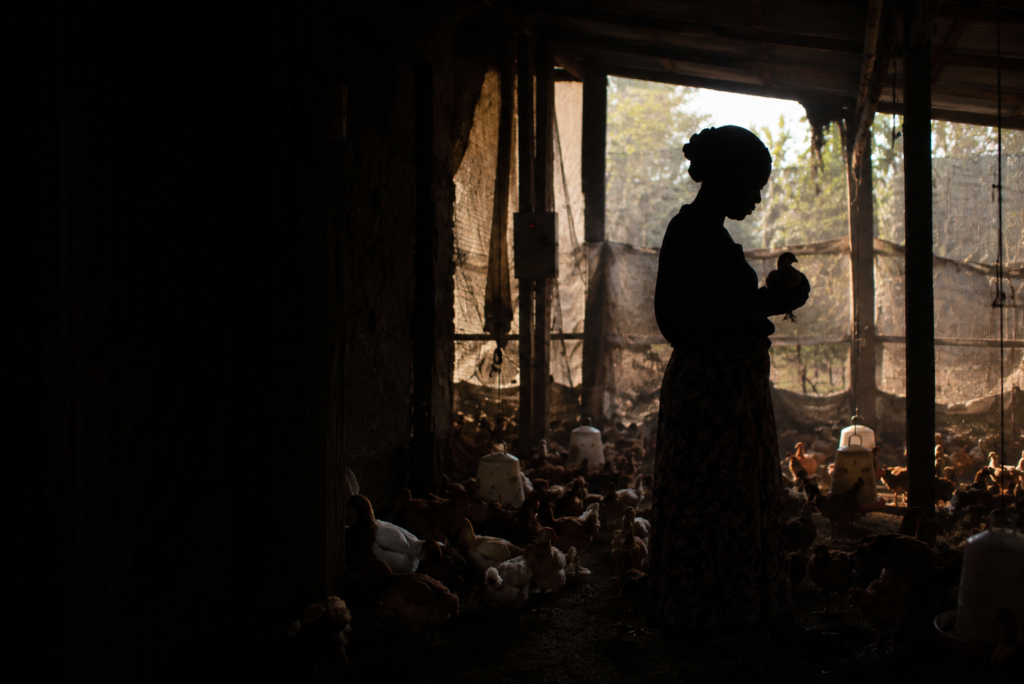
Just five years ago, Niragire Jenny owned no livestock.
Like many vulnerable families in Gishamvu Sector of Huye District, she struggled to earn a living through small-scale farming. Starting a business seemed out of reach, and owning hundreds of chickens was something she never imagined.
Today, Jenny stands proudly among Rwanda’s agricultural innovators, sharing a story of resilience, determination and hope.
“I came to Rwanda Agricultural Show to testify to the positive impact of the PRISM Project. We are here today because of the income we earn from the poultry business we built. This is our fourth time exhibiting, and every year we come back because our business continues to grow,” she says
From Almost Nothing to New Hope
Jenny’s life changed in 2020 when she became one of the beneficiaries of the Partnership for Resilient and Inclusive Small Livestock Markets (PRISM) Project.
At the time, she had no livestock.
Like other vulnerable households selected by the project, she received 10 chickens together with practical training in poultry farming, animal health, cooperative management, nutrition and business development.
Looking back, Jenny says the greatest gift was not the chickens.
It was the knowledge.
“The chickens were important, but the training changed everything. It opened our minds. It taught us how to raise poultry properly, manage our income and think about farming as a business instead of just a way to survive.”
The project also introduced beneficiaries to the Passing on the Gift (Kwitura) approach, encouraging farmers to share livestock with other vulnerable families after their flocks multiplied.
As more households benefited, different farmer groups joined together and eventually formed IMPINDUKA ZA GISHAMVU Cooperative.
Building a Business, One Step at a Time
Success did not come overnight.
The cooperative began by raising only 200 day-old chicks purchased from Uzima Chicken.
As members gained experience and confidence, production increased to 300 chicks, then 500 chicks.
Today, the cooperative has 535 chicks in its poultry house waiting for vaccination, and its members have set an ambitious goal of producing 2,000 chicks.
Besides raising chicks, the cooperative also produces eggs and supplies improved poultry to farmers across the area.
“We started with just 200 chicks. Today we have more than 500, and our goal is to reach 2,000 chicks. Every production cycle teaches us something new and helps us grow.”
Every production cycle generates income that members share while reinvesting part of the profits to expand the business.
From Receiving Help to Helping Others
For Jenny, the proudest achievement is not the size of the poultry business.
It is the opportunity to help others.
Today, the same cooperative that once depended on support is supplying chicks to other farmers and helping them improve their poultry businesses.
“Before, people helped us by giving us livestock. Today, we are the ones supplying chicks to other farmers. We help them restock their poultry houses and improve their production. That makes us very proud because we are now giving back to our community.”
The cooperative has also built a strong partnership with Uzima Chicken, creating a reliable market link that continues to strengthen its business.
What started with ten chickens has grown into a sustainable enterprise.
Confidence Changed Everything
Jenny believes the biggest transformation happened in the minds of cooperative members.
Before joining the project, many were afraid of approaching banks or investing in businesses.
Today, they have the confidence to dream bigger.
“The training gave us confidence. Some members have taken loans from banks to invest in other income-generating activities. We now believe we can achieve more because we have learned how to manage our businesses and generate income.”
The cooperative’s next goal is to buy its own land, build larger poultry houses and expand production to serve more farmers across Huye District and beyond.
“We want to own our own land and expand our business. We believe we can supply not only our sector but also neighboring districts. That is the future we are working towards.”
Her Message to Other Farmers
As thousands of visitors tour the Rwanda Agricultural Show, Jenny hopes her story encourages other vulnerable families to believe that change is possible.
She says success begins with a willingness to learn, work hard and take advantage of every opportunity.
“PRISM gave us livestock, but it also taught us to believe in ourselves. If you are willing to learn, work hard and cooperate with others, you can change your life. We started with only ten chickens. Today we have a growing business that supports many families.”
Why Jenny Is an Unsung Hero
Jenny’s story is one of many emerging from the Partnership for Resilient and Inclusive Small Livestock Markets (PRISM) Project, an initiative of the Government of Rwanda implemented by the Ministry of Agriculture and Animal Resources (MINAGRI) through the Rwanda Agriculture and Animal Resources Development Board’s Single Project Implementation Unit (RAB-SPIU), in partnership with the International Fund for Agricultural Development (IFAD). The project is also implemented with support from Heifer International and other partners.
In Huye District alone, the project has supported 1,716 farmers, including 1,002 women and 714 men, through livestock distribution, practical training and the Passing on the Gift (Kwitura) approach.
But statistics tell only part of the story.
Jenny’s greatest achievement is not growing a poultry business. It is transforming a small opportunity into a sustainable enterprise that creates income, restores confidence and helps other families improve their livelihoods.
Five years ago, she received just 10 chickens.
Today, she is supplying improved chicks to fellow farmers, creating employment through her cooperative and inspiring others to believe that success can start with even the smallest opportunity.
That is what makes Niragire Jenny Unsung Hero an ordinary woman whose determination, hard work and willingness to learn have transformed not only her own life but also the lives of many others, one chick at a time.
|| The Comments ||